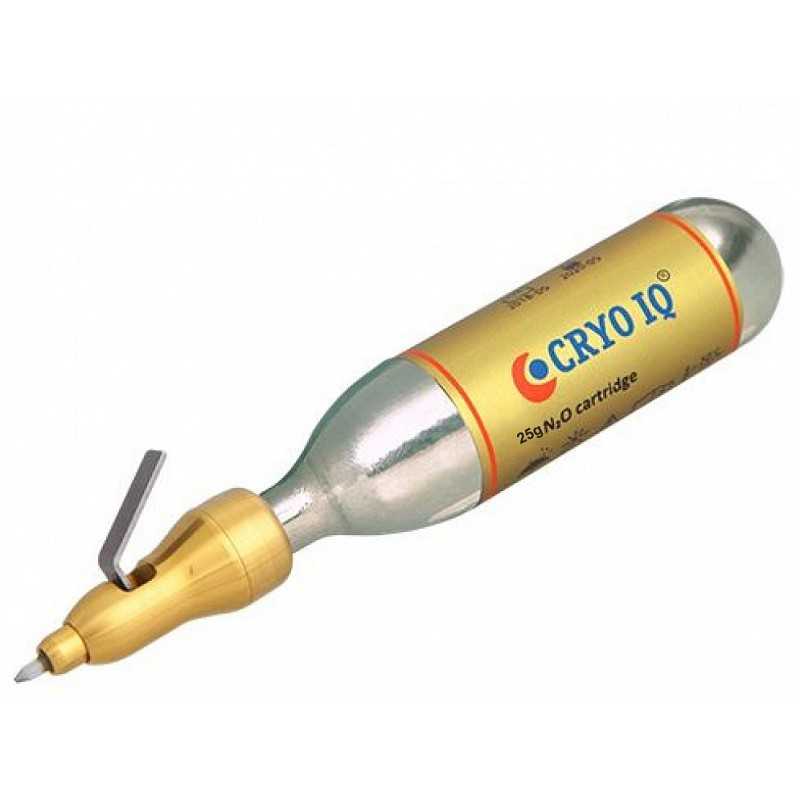
Most warts, verrucas and skin tags are harmless, and many warts go away by themselves in the end. But if one is sore, keeps catching on your clothes or has been there for months, you don’t have to wait it out. At Westerhailes Pharmacy in Wester Hailes, Edinburgh, a pharmacist can look at it, tell you what it is and freeze it off with cryotherapy if it’s suitable. One treatment costs £85, and you don’t need a GP referral.
This guide covers what you can try at home first, how cryotherapy works, what the skin looks like afterwards and when a skin mark needs a doctor instead.
The short version
- Warts and verrucas often clear on their own, but NHS inform says it can take up to 2 years.
- Try a pharmacy treatment first if you’re happy to be patient. Salicylic acid gels, paints and plasters are sold over the counter.
- Cryotherapy freezes the growth so it blisters, scabs and falls off over the next few weeks.
- Skin tags are not removed on the NHS because it counts as cosmetic, so you would usually pay wherever you go.
- One treatment at Westerhailes costs £85. Book online or call 0131 275 4660.
Wart, verruca or skin tag? How to tell
It helps to know what you’re dealing with, because they are not all treated in the same way.
| What it is | What it looks like | Where it usually appears |
|---|---|---|
| Common wart | Firm, raised lump with a rough surface | Fingers, knuckles, hands and knees |
| Verruca | Flat, hard patch, often with tiny black dots | Soles of the feet, can hurt when you walk |
| Plane wart | Small, smooth, flat and yellowish, sometimes in clusters | Face, hands and lower legs |
| Skin tag | Soft, skin-coloured flap that hangs off the skin | Neck, armpits, eyelids, under the breasts |
| Cherry angioma | Small, bright red spot | Chest, back and arms |
| Seborrhoeic keratosis | Raised, waxy brown patch that looks stuck on | Chest, back and face, more common with age |
Warts and verrucas are caused by a virus (HPV) and can spread. Skin tags, cherry angiomas and seborrhoeic keratoses are not infections and cannot be passed on. If you can’t tell which one you have, that is fine. Our pharmacist will look at it before anything else happens.
Things you can try first
For a wart or verruca that isn’t causing much trouble, leaving it alone is a reasonable choice. If you want to speed things up, NHS inform lists salicylic acid as one of the usual treatments. It comes as gels, paints and medicated plasters, and you can buy it from any pharmacy, including ours. Advice on warts and verrucas is also part of the free NHS service explained in our guide to Pharmacy First in Edinburgh.
- Use it every day. These treatments work slowly and usually take several weeks.
- Soak and file. Soaking the wart in warm water and gently filing the top with an emery board or pumice stone between applications helps the treatment work. Don’t share the file.
- Protect the skin around it. Salicylic acid can irritate healthy skin.
- Ask first if you have diabetes or poor circulation, or if the wart is on your face. Some over-the-counter treatments are not suitable in these cases.
To stop a wart or verruca spreading, cover it with a waterproof plaster or a verruca sock when you swim, don’t share towels or shoes, and try not to pick or scratch it.
There is no home treatment for skin tags. The NHS advises against removing a skin tag yourself because of the risk of bleeding, infection and scarring.
How cryotherapy works
Cryotherapy means treating the skin with extreme cold. The freezing destroys the cells in the wart, verruca or skin tag, and the body clears the treated skin away as it heals. It is one of the standard wart treatments listed by NHS inform, and the British Association of Dermatologists says it is used for viral warts, seborrhoeic keratoses and other harmless skin growths.
Here is what an appointment at Westerhailes looks like:
- A quick check. The pharmacist looks at the area, asks how long you’ve had it and confirms what it is. If it isn’t suitable for freezing, or it needs a doctor, we’ll tell you there and then.
- The freezing. The freezing treatment is applied to the growth for a few seconds. It stings, a bit like a sharp pinch or a cold burn, and for most people the feeling passes quickly.
- Aftercare advice. We’ll explain what to expect over the next few weeks and what to look out for.
The treatment itself only takes seconds, and you can go straight back to work or school afterwards.
What happens after treatment
The treated skin goes through a few stages as it heals. The British Association of Dermatologists describes it as a reaction similar to a burn, so it’s normal for it to look worse before it looks better.
| When | What you might notice |
|---|---|
| Straight away | The skin goes white, then red as it thaws. It may sting or throb for a while |
| First few hours | Swelling, and often a blister. Sometimes the blister fills with blood, which is harmless |
| After a few days | The blister settles and a scab forms |
| Next few weeks | The scab falls off. Healing can be slower on the legs |
While it heals:
- Keep the area dry for the first 24 hours, then wash it gently and pat it dry.
- Don’t pick the scab, as that makes a scar more likely.
- Paracetamol can help if it aches.
- A plaster is only needed if the area is likely to get rubbed or knocked.
- Don’t pop a blister yourself. Speak to us first.
Contact us or your GP if the area becomes more painful, hot or swollen, or starts to ooze pus, as these can be signs of infection.
Does it always work?
Not always first time. Skin tags and small flat growths often clear after one treatment. Warts and especially verrucas are tougher, and some need more than one treatment. A wart can also come back after it has gone.
Like any treatment, there are possible side effects. The skin may be left a little lighter or darker than before, especially on black or brown skin. This usually fades but can be permanent. Scarring is uncommon. The pharmacist will go through this with you before treatment so you can decide.
Can I get it done on the NHS?
Usually not. The NHS says skin tag removal is considered cosmetic, so you will normally need to pay to have one removed. For warts and verrucas, NHS inform says a pharmacist can advise on treatment, and most are managed with over-the-counter products. If yours is painful, keeps coming back or is in an awkward place, a private appointment gets it treated without waiting for it to clear.
When to see a GP instead
Freezing is only for skin marks that are clearly harmless. See your GP rather than booking cosmetic removal if you have:
- A mole or mark that has changed in size, shape or colour
- A spot that bleeds, crusts, itches or won’t heal
- A growth you’re worried about, or one you can’t identify
- A wart on your face or genitals
- A wart or verruca that is very large, very painful or keeps coming back
- A skin tag that is getting bigger, painful or bleeding
If our pharmacist sees anything that needs a closer look, they will tell you and suggest you see your GP before any treatment. The NHS guidance on moles explains the changes to look out for.
Cryotherapy at Westerhailes Pharmacy
We treat skin tags, warts and verrucas, plane warts, cherry angiomas, seborrhoeic keratoses, sebaceous hyperplasia and age spots. You can see each one, with photos, on our cryotherapy page.
| Treatment | Price |
|---|---|
| One treatment (a single lesion or small area) | £85 |
| Two or more treatments | Ask in store, it depends on the area |
We’re inside Westside Plaza at the Westerhailes Centre, Edinburgh EH14 2SW, and open Monday to Friday 9am to 6pm and Saturday 9am to 5.30pm. You can book online or ring the team on 0131 275 4660. If you’d rather ask a question first, use our contact page.
Frequently asked questions
Does cryotherapy hurt?
It stings for a few seconds while the freezing is applied, and the area can feel sore or throb for a while afterwards. Most people find it very manageable. Paracetamol beforehand or afterwards can help.
How long does it take for a wart to fall off after freezing?
A blister usually forms within hours and turns into a scab after a few days. The scab normally falls off within a few weeks, sometimes longer on the legs.
Will I need more than one treatment?
Skin tags and small growths often only need one. Warts and verrucas sometimes need a repeat treatment. The pharmacist will tell you what to expect at your appointment.
Can you freeze a verruca on a child?
Ask us first. Many children’s warts and verrucas clear on their own, and freezing can be uncomfortable for younger children. We can talk you through the options, including over-the-counter treatments.
Can I go swimming after cryotherapy?
Keep the area dry for the first 24 hours. After that, cover it with a waterproof plaster while it heals, which also stops a wart or verruca spreading in the pool.
Do I need a GP referral?
No. You can book directly with us. If the pharmacist thinks a skin mark needs a GP to look at it first, they will tell you.
Book a cryotherapy appointment
If a wart, verruca or skin tag is bothering you, book a cryotherapy appointment online or call us on 0131 275 4660. You can also pop in and ask the team about over-the-counter treatments. You’ll find our other services in the pharmacy services guide.